What Fallout Shelter Happiness Changes
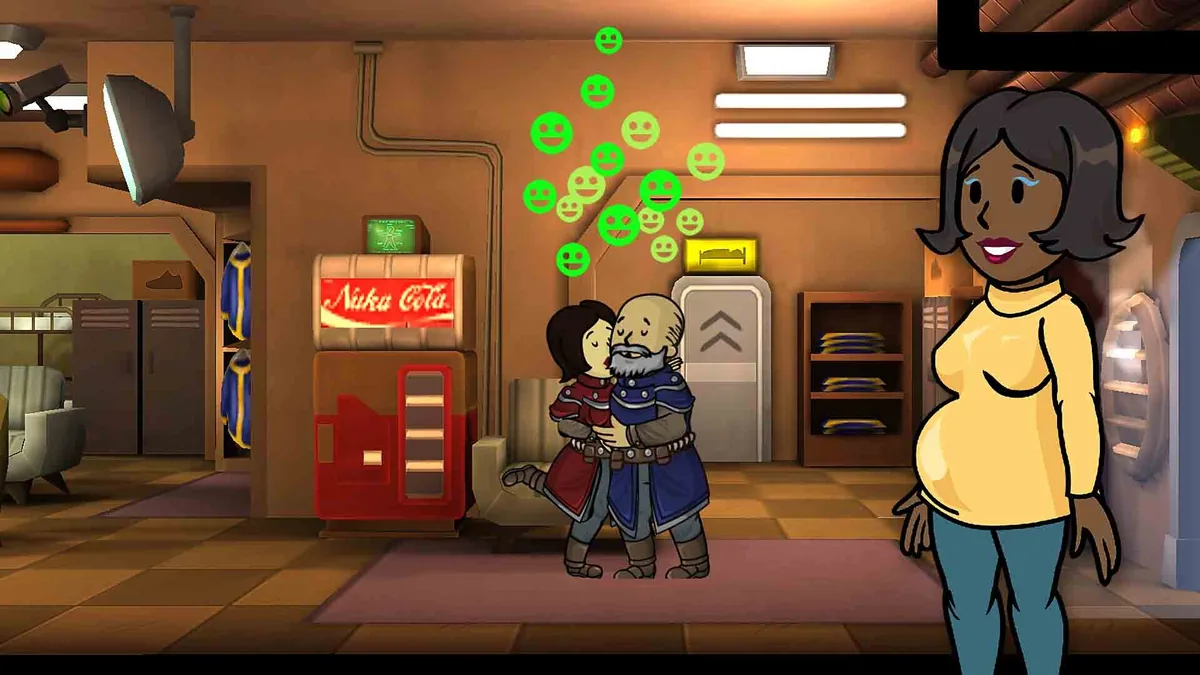
Every dweller has a mood value and the vault also shows an overall happiness percentage. The vault number is an average, so one unhappy group can pull the visible result down even when another room looks fine. Higher overall happiness is associated with a production efficiency boost, which is why morale problems can feel like a resource problem. It does not replace the room's required SPECIAL stat, and it does not guarantee a particular item, quest reward, or Caps payout.
Fast answer: check the resource bars, health and radiation, room assignments, active incidents, and population pressure in that order. The SPECIAL stats guide explains the matching room stat; this page focuses on the happiness decision that follows.
What Lowers Happiness and How to Diagnose It
When happiness falls, start with conditions that affect the whole vault. A lack of food, water, or power can lower mood and also creates a production emergency. A single empty bar may therefore cause several symptoms at once: slower recovery, unhappy workers, and a production queue that never catches up. Collect ready rooms, keep a reserve, and pause expansion until the basics are safe.
Next, look at individual dwellers. Injury, radiation, a recent incident, or a worker placed in a poor-fit room can make the average worse. Move one person at a time and watch the room's response instead of swapping the entire population. If the vault has just survived an attack or fire, let the affected rooms settle before testing a rush.
| What you see | First check | Low-risk response |
|---|---|---|
| Many rooms lose mood together | Food, water, and power bars | Stabilize production and keep a reserve before building more rooms. |
| One room is much lower | Worker health and SPECIAL fit | Heal the team, then assign the strongest matching workers. |
| Mood dropped after a rush | Rush outcome and incident state | Stop chaining rushes; clear the incident and restore the room first. |
| Average stays low after repairs | Unhappy individuals and room coverage | Inspect dwellers one by one and check that no critical room is unstaffed. |
Match Dwellers to the Right Jobs
Correct assignment is one of the most repeatable ways to support Fallout Shelter happiness. Production rooms display a relevant SPECIAL letter. Place the dweller with the best natural match there, then use an outfit when it supports the same role. A worker who is useful in the power room may be a poor choice for a diner, even when both rooms are full.
- Read the room's SPECIAL letter and identify the current shortage.
- Move the strongest available match into that room and keep essential rooms staffed.
- Heal or de-radiate the dweller before judging the new happiness result.
- Let one production cycle complete, then decide whether another move is needed.
For a full letter-by-letter chart, use the Fallout Shelter SPECIAL stats guide. It covers training timing and combat roles; here the important boundary is that a good assignment is a foundation for happiness, not a substitute for food, water, power, or safety.
Radio Rooms, Charisma, and Social Recovery
An internal radio broadcast can support happiness across the vault, while an external broadcast is aimed at attracting new dwellers. Those goals are different. If your population is already near housing capacity or your resources are tight, recruitment can make the mood problem harder. Use the radio room as a deliberate choice: staff it with a Charisma-fitting dweller, keep the room supplied, and select internal broadcast when morale is the immediate priority.
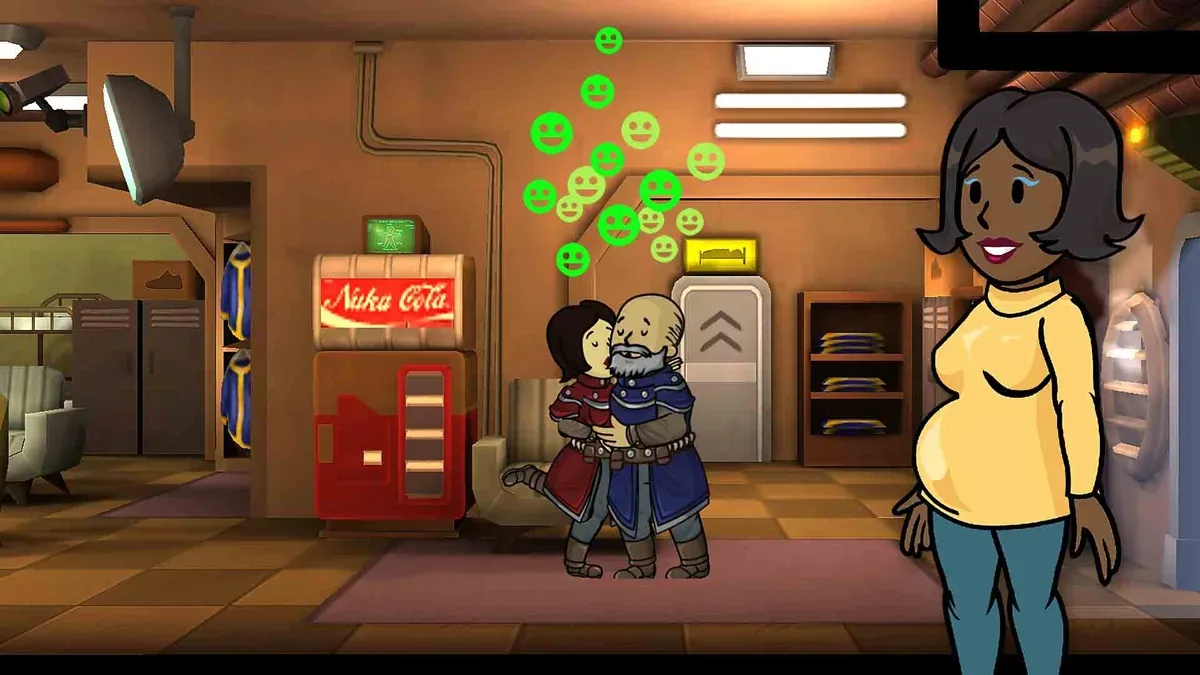
A radio room is a supporting tool rather than a cure-all. A high-Charisma operator cannot make an empty water bar harmless, and it cannot undo a failed rush or untreated injuries. Read the radio room guide for room size, placement, and broadcast choices.
Rushes, Quests, and Temporary Boosts
A successful room rush raises happiness for the dwellers assigned to that room; the commonly documented amount is 10%. A failed rush can push the same room in the opposite direction and may trigger an incident. That makes rushing useful as a selective recovery action when the displayed risk is acceptable, but unreliable as the base of a happiness plan.
Choose a nonessential room with healthy workers, enough emergency supplies, and a recovery plan. Do not rush the only food, water, or power room when the vault is already short. If the chance of failure is high, repair the underlying shortage and use ordinary production instead. Quests and objectives can also create rewards and progression, but do not remove every trained defender or resource worker just to chase a temporary mood improvement.
After a rush, wait for the result before trying another action. A chain of clicks can turn one small incident into a vault-wide shortage. The Caps guide covers the same risk boundary from the earning side: rushes are optional bonuses, not guaranteed income.
A Repeatable Routine to Increase Happiness
Use this order whenever the happiness meter is falling. It is intentionally conservative so the fix does not create a second problem.
- Pause expansion. Keep new rooms, population growth, and recruitment on hold until the three core resources have a buffer.
- Collect and repair. Collect ready production, heal injured dwellers, remove radiation when supplies allow, and clear incidents.
- Fix the largest room mismatch. Move strong SPECIAL matches into the bottleneck room, then replace workers one at a time.
- Use social support. Turn on an internal radio broadcast if the station is staffed and the vault is ready for its power cost.
- Test one safe boost. Rush a nonessential room only when the displayed risk and recovery supplies are acceptable.
- Recheck after a cycle. Compare the vault average and the individual rooms after production completes, then repeat only the step that still addresses a real problem.
Set a practical target: a stable, well-staffed vault is more useful than a perfect number that depends on repeated risky rushes. Happiness can move as dwellers arrive, leave, heal, work, or experience incidents, so measure the trend after a normal cycle.
Common Happiness Mistakes
- Building more rooms first: expansion increases demand and can deepen the shortage that lowered mood.
- Moving everyone at once: a large reshuffle can leave the actual bottleneck unstaffed; change one room at a time.
- Chaining high-risk rushes: a failed rush can create an incident and reduce the very mood you were trying to raise.
- Confusing Charisma with happiness: Charisma helps social roles, but it does not replace resource stability or health.
- Using a generator or clock trick: third-party “free happiness” downloads and device-clock changes are unnecessary and can create save or cloud-sync problems.
- Editing before making a backup: if you use a save editor, keep the original
Vault1.sav,Vault2.sav, orVault3.savuntouched and test a copied file.
Save Editing and the Happiness Boundary
The browser-based Fallout Shelter Save Editor exposes supported happiness fields for a copied vault, but an edit does not repair the causes of a low mood. Resources can still run out, a room can still be staffed poorly, and a failed incident can still interrupt production. Use the editor only when you understand the backup and restore path, and keep practical happiness values within the game's visible range.
For value boundaries and a cautious test sequence, read the max values guide. For file locations and cloud-sync warnings, use the platform guide. Normal gameplay fixes should come first; save editing is an optional, reversible experiment on a copy.
Fallout Shelter Happiness FAQ
What is Fallout Shelter happiness?
It is a mood measure for individual dwellers and the vault average. Higher overall happiness is linked to a production efficiency boost, but the number does not replace the room's SPECIAL requirement or guarantee a reward.
How do I increase happiness in Fallout Shelter?
Restore food, water, and power first. Then heal or de-radiate affected dwellers, correct room assignments, clear incidents, and use an internal radio room or a low-risk successful rush as supporting actions.
Does a radio room raise happiness?
Internal broadcast can support vault happiness. Staff the room with a suitable Charisma dweller and remember that radio coverage cannot compensate for resource shortages, injuries, or wrong jobs.
Should I rush a room to fix low happiness?
Only when the displayed risk is acceptable, the room is not essential, and you can recover from an incident. A successful rush helps the assigned room, while a failed rush can lower mood and interrupt production.
Why is my vault happiness low even with full rooms?
Full rooms can still contain injured dwellers, poor SPECIAL matches, or workers affected by a recent incident. Check the resource bars and individual rooms rather than judging staffing by headcount alone.
Can a save editor set happiness to 100?
A supported editor can expose happiness fields, but edit only a copied save, use practical values, and test after restoring it. The underlying resource, health, and room problems still need normal gameplay attention.
Sources and Confidence
This guide separates documented mechanics from practical recommendations. The main claims were checked against three readable Fallout Shelter reference pages and a community question during the 2026-11-15 research pass. Exact outcomes can vary with game state, room upgrades, and incidents, so the routine avoids fixed payout promises.
- Fallout Wiki: Happiness (Fallout Shelter) - mechanics, resource effects, job matching, radio, and rush notes.
- Fallout Wiki mirror: Happiness - cross-check of the same gameplay concepts.
- Gaming StackExchange: How do I improve Happiness? - player troubleshooting context for radio rooms and room assignments.
- Fallout Shelter on Steam - official game listing and store media context.